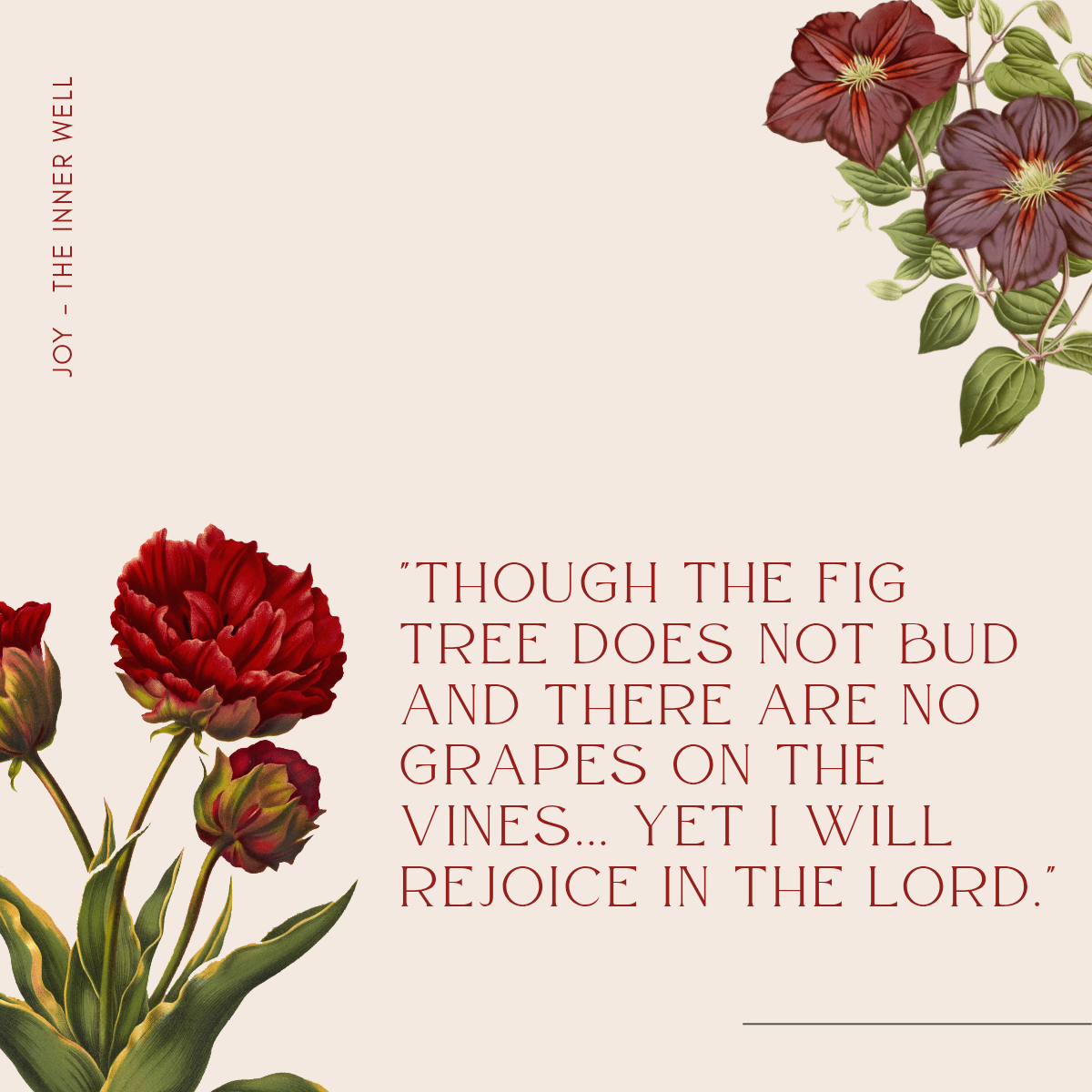
Scripture Focus: Habakkuk 3:17–18; John 15:11
Theme: The Fruit of the Spirit vs. The Result of Circumstances
Imagine a high-altitude hiker trekking through a scorched, cracked desert. The sun is a relentless hammer, the canteen is dry, and every horizon looks like a shimmering mirage of disappointment. Most people in this position would be grumbling, despairing, or silent in their exhaustion. But suddenly, from behind a canyon wall, you hear it: a clear, resonant song. You find the hiker sitting in the dust, not just enduring the heat, but seemingly vibrant. When you ask how they can sing in such a wasteland, they point to a hidden crevice in the rock. Deep beneath the burning sand, an artesian well—fed by a source miles away in the cool mountains—is bubbling up.
This is the mystery of Christian Joy. It is the “Inner Well” that refuses to run dry just because the surface of life is parched.
Most of us confuse Joy with Happiness. Happiness is a “happenstance” emotion; it is tethered to our “happenings.” If the bank account is full, the kids are behaving, and the health report is clear, we are happy. But the moment the “happenings” turn sour, happiness evaporates like morning mist. Joy, however, is a fruit. It is a biological certainty of the Spirit that persists even when the harvest fails.
One of the most radical expressions of joy in all of Scripture comes from the prophet Habakkuk. He lived in a time of national collapse, impending invasion, and economic ruin. In Chapter 3, verses 17–18, he writes what could be called the “Anthem of the Fruitful Life”:
“Though the fig tree should not blossom, nor fruit be on the vines, the produce of the olive fail and the fields yield no food, the flock be cut off from the fold and there be no herd in the stalls, yet I will rejoice in the Lord; I will take joy in the God of my salvation.”
Notice the “Though/Yet” structure. Habakkuk isn’t delusional. He isn’t practicing “toxic positivity” or pretending the famine isn’t real. He lists the failures of every earthly “vine” he relies on—food, finance, and security. But then comes the pivot: “Yet I will… take joy.”
In the Greek New Testament, the word for joy is Chara, which is closely related to Charis (grace). Joy is the deep-seated confidence that because of God’s grace, the end of the story is already written, and it is good. Jesus tells His disciples in John 15:11, “These things I have spoken to you, that my joy may be in you, and that your joy may be full.”
Jesus isn’t offering a temporary “mood boost.” He is offering His own resilient, cross-enduring joy. It is a joy that is “full” because it is anchored in the unchanging character of the Vinedresser, not the fluctuating weather of the world.
If Joy is a fruit that God naturally produces in an abiding branch, why do so many Christians look so miserable? Usually, it’s because we have allowed “thieves” to break into the vineyard.
The first thief is Comparison. We look at someone else’s “vineyard”—their house, their marriage, their highlight reel on social media—and we decide that our fruit isn’t good enough. Comparison kills joy because it shifts our gaze from the Provider to the Peer.
The second thief is Entitlement. When we believe we “deserve” a life free of pruning or drought, we become bitter when trials arrive. Bitterness is the acid that kills the bud of joy before it can bloom.
The third thief is Noise. We are so busy consuming the “happenings” of the world that we can no longer hear the bubbling of the “Inner Well.” We have replaced the meditation of the Word with the meditation of the newsfeed.
To live a fruitful life of joy, we must realize that joy is a supernatural protest. It is our way of telling the world that our satisfaction isn’t for sale and our peace isn’t dependent on the stock market or the political climate. Joy is the quiet “yes” to God in the middle of a loud “no” from the world.
This week, we are going to practice “Joy-Maintenance”—protecting our hearts from the thieves and intentionally drawing from the mountain source.
- The “Even Though” Journal:
Identify the “famine” in your life right now. Maybe it’s a strained relationship, a health struggle, or a workplace frustration. Write it down using Habakkuk’s template: “Even though [insert struggle] is happening, YET I will rejoice in the Lord because [insert an attribute of God, e.g., He is faithful].” Do this every morning this week. - A “Complaint Fast”:
Complaining is the leak in the well. This week, try to go from sunrise to sunset without voicing a single complaint. When you feel a grumble rising, replace it with a “God-Refrain”—a short phrase like “The Lord is my Shepherd” or “God, I trust Your timing.” Watch how your internal “soil” changes when the toxicity of grumbling is removed. - Intentional Gratitude:
At dinner or before bed, name three “Hidden Joys” from the day. Not the big things (like a promotion), but the small, God-given “sips” of grace: the smell of coffee, a kind word from a stranger, or the way the light hit the trees. By noticing the small fruits, you train your soul to see the Vinedresser’s hand everywhere.
Reflection Question: Is my joy currently a thermometer (reflecting the temperature of my circumstances) or a thermostat (setting the climate of my soul through Christ)? What is one “thief” I need to evict from my heart today?
Prayer: Lord, my circumstances are shifting, but You are the same. When my ‘fields’ are empty and my ‘canteen’ is dry, remind me of the hidden well of Your presence. I choose to rejoice today, not because life is perfect, but because You are good. Be my song in the drought. Amen.
*****************************************
THE FRUITFUL LIFE SERIES
Week 1:
Week 2:
Week 3:
Week 4: