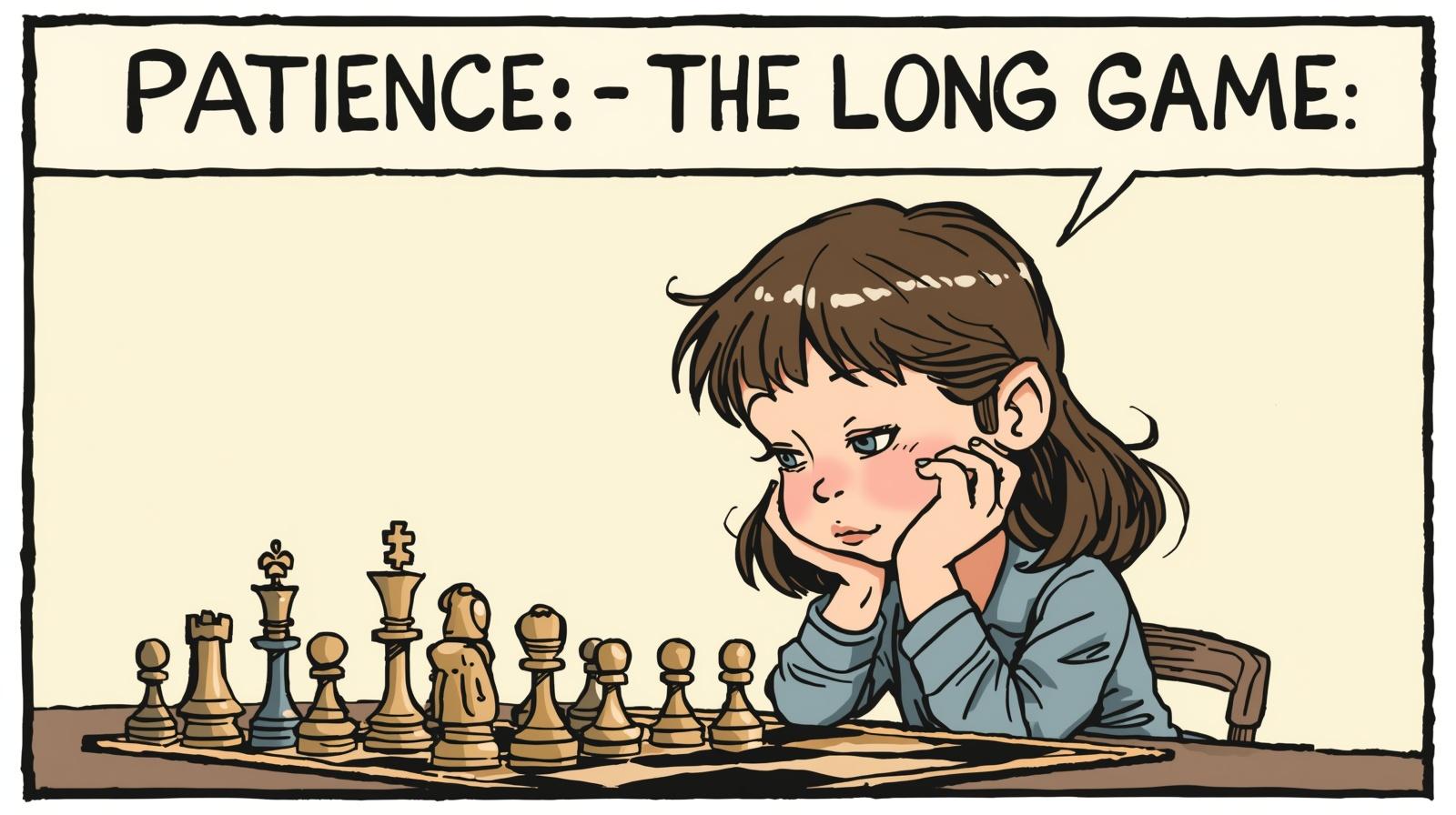
Scripture Focus: James 5:7–8; Galatians 5:22
Theme: Developing the Farmer’s Heart
We live in an age of “Instant.” We have high-speed internet, overnight shipping, and microwave meals that turn raw ingredients into dinner in ninety seconds. We have become a society that views “waiting” as a technical failure. If a webpage takes three seconds to load, we feel a surge of cortisol. If the person in front of us at the stoplight doesn’t move the millisecond the light turns green, we reach for the horn. We have mastered the art of the “hustle,” but we have lost the art of the “hone.”
The problem is that the Spirit of God does not operate on a microwave timeline. He operates on a farming timeline. You cannot shout at a seed to make it grow faster. You cannot “hack” a harvest. In the Kingdom of God, time is not an obstacle to be overcome; it is a tool to be used.
Patience is the fruit that proves we trust the Vinedresser’s clock more than our own calendar. It is the ability to remain under pressure without becoming sour. While the world demands results now, the Spirit is producing a character that can sustain the weight of the results later.
In James 5:7, we are given a vivid image of what spiritual patience looks like: “Be patient, therefore, brothers, until the coming of the Lord. See how the farmer waits for the precious fruit of the earth, being patient about it, until it receives the early and the late rains.”
The Greek New Testament uses two primary words for patience, and they are both essential “fibers” of the fruitful life:
- Makrothumia: This is “long-suffering” toward people. It is the ability to be wronged or frustrated by others and not retaliate. It is the “long fuse” of the Spirit.
- Hupomonē: This is “endurance” toward circumstances. It is the capacity to stay under a heavy load, remaining steadfast when life is difficult.
The farmer in James’s illustration isn’t being passive; he is being expectant. He has done the work of planting and watering, but he recognizes that he does not control the rain. He waits because the fruit is “precious.” He knows that if he tries to dig up the seed to check on its progress, he will kill the very thing he’s waiting for.
Patience is the settled conviction that God is working in the “underground” seasons of our lives—the quiet years, the waiting-room years, the transition years—just as much as He is in the harvest years.
In our modern world, we see that we often mistake patience for weakness. We think the patient person is the one who is too timid to act. But in reality, patience is controlled power. It is the strength to hold your tongue when you have a sharp retort ready. It is the courage to stay in a difficult marriage or a hard job because you know God isn’t done with you there yet.
The “Fruit of Patience” is what keeps us from becoming “spiritual Ishmaels”—things we birth out of our own flesh because we got tired of waiting for God’s “Isaac.” When we rush God, we usually create a mess that we then have to manage for years.
When you are rooted in the Vine, you realize that God is never “late.” He is often slow, but He is never late. He is using the waiting period to prepare the branch for the weight of the fruit. If the fruit grew before the branch was strong enough to hold it, the branch would snap. Patience is God’s way of thickening your “spiritual wood” so you can carry the abundance He has planned for you.
Patience is a muscle; it only grows when it is resisted. This week, we are going to lean into the resistance.
- The “Longest Line” Exercise:
This is a classic spiritual discipline. This week, when you are at the grocery store, the bank, or in traffic, intentionally choose the lane that looks the slowest. While you wait, do not look at your phone. Instead, pray for the people around you. Turn the “irritation of waiting” into an “opportunity for intercession.” - Identifying the “Unfinished”:
Is there a prayer you’ve stopped praying because it’s taking too long? A dream you’ve abandoned because the door hasn’t opened? This week, bring that “seed” back to the Vinedresser. Say: “Lord, I trust Your timing. I choose to wait with hope rather than worry.” - The “Sunset Reflection”:
At the end of each day, ask yourself: “Where did I try to ‘force’ a result today instead of trusting God’s pace?” Repent of the hurry, and ask the Holy Spirit to give you “Farmer’s Eyes” to see the growth that is happening beneath the surface.
Reflection Question: In what area of my life am I most tempted to “dig up the seed” because I don’t see results yet? How would my perspective change if I viewed waiting as “training” rather than “wasting”?
Prayer:
God of the Harvest, forgive my hurry. I confess that I’ve tried to dig up the seeds I’ve planted because I couldn’t see them growing. Give me the heart of a farmer. Help me to wait expectantly for the ‘early and late rains,’ knowing that You are never late. Steady my heart in the wait. Amen.